
Understanding Neural Networks
Exploring AI, Data, and Technology
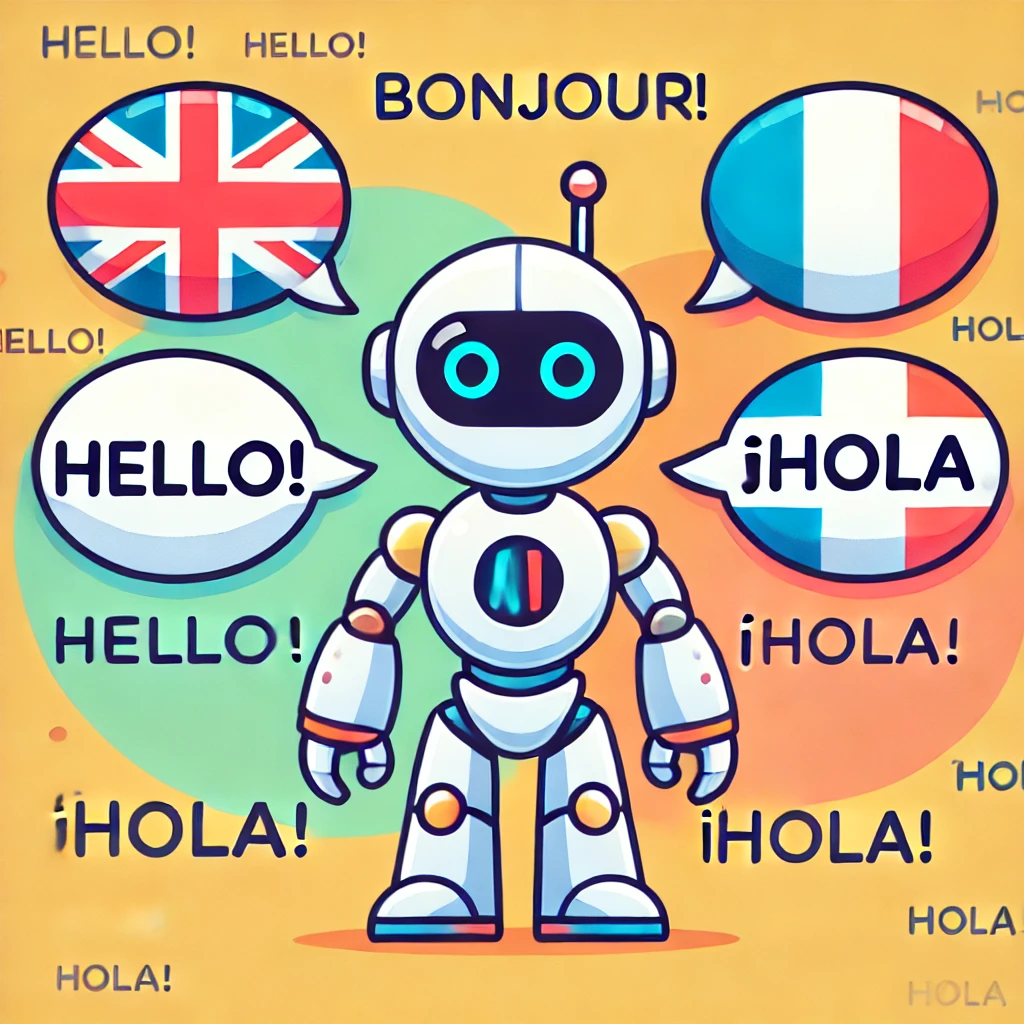
Artificial Intelligence (AI) language models like GPT-4 demonstrate varying levels of proficiency across different languages, including English, Spanish, and French. These discrepancies raise questions about the reasons behind these differences, and why models often seem more polished and nuanced in English compared to other languages. Let's dive into the key factors that shape these linguistic capabilities, examining dataset availability, language complexity, and the development origins of the models.
The proficiency of AI language models relies heavily on the data they are trained on. These datasets are often scraped from publicly available content such as books, websites, news articles, and social media. The size and quality of these datasets vary considerably depending on the language.
English: Being the most dominant language on the internet, English has an overwhelmingly larger digital footprint. Major websites, scholarly articles, and news outlets are predominantly in English. AI models have access to a vast corpus of English text, ranging from casual conversations to highly specialized content, ensuring they are well-versed in numerous contexts.
Spanish: Spanish also has a significant presence online, but its representation is less expansive compared to English. While there are many Spanish-speaking countries, the digital content in Spanish doesn't match the volume or diversity of English content. Nevertheless, Spanish-language datasets are diverse enough to give AI models a solid understanding of the language.
French: French has a strong presence, especially in Europe, Africa, and Canada, but its online footprint is smaller than English and slightly less extensive than Spanish. This smaller dataset can limit the diversity of linguistic examples available to train the model.
Another critical factor influencing AI proficiency is the linguistic structure and complexity of the language itself.
English: English is often considered a relatively simple language in terms of grammar and sentence structure. While it has irregularities, its syntax and word formation are generally straightforward, especially when compared to more inflected languages. This simplicity allows AI models to grasp the rules of English more easily, enhancing fluency and nuance.
Spanish: Spanish has more complex grammatical rules, particularly with its verb conjugations, gendered nouns, and use of subjunctive mood. These aspects introduce challenges for AI models, as they require more nuanced understanding and contextual application. However, due to Spanish’s phonetic consistency (words are generally spelled as they are pronounced), AI can quickly pick up the language once it has adequate training data.
French: French presents its own set of challenges, including silent letters, complex verb conjugations, and irregular pronunciations. Additionally, French grammar includes many exceptions, which can make it harder for an AI model to produce polished and consistent output. The smaller and more specialized dataset compounds these difficulties.
The question arises whether AI models are inherently better at English because they are developed by English-speaking teams or because English data is more prevalent. The reality is a combination of both.
English-Centric Development: Many AI research teams and companies, including OpenAI, are based in English-speaking countries like the United States and the United Kingdom. Consequently, much of the initial research, development, and fine-tuning of these models happens in English. This results in optimizations and innovations being more readily applicable to English before being extended to other languages.
Prevalence of English Data: Even if the developers weren’t English-speaking, the sheer volume of English data on the internet would naturally lead to better English proficiency in AI models. The internet is saturated with high-quality English data from authoritative sources, diverse genres, and contexts. This rich data pool allows models to develop a nuanced and polished understanding of English in ways that might not be as easily achievable in other languages.
To address the disparities between languages, AI developers engage in multilingual fine-tuning. This involves retraining the model on datasets in various languages, hoping to equalize performance across linguistic divides. However, this process is challenging because:
Language Variety: The variance in language structure requires models to adapt to different grammar, syntax, and cultural nuances. For example, humor or idiomatic expressions in Spanish may not directly translate into French, and vice versa.
Smaller Language Datasets: Although models like GPT-4 are designed to support multiple languages, they perform better in languages for which larger, high- quality datasets are available. For Spanish and French, although there are significant efforts to improve, these models may still struggle with less common dialects or regional variations that appear in smaller datasets.
Efforts are ongoing to bridge the gap between English and other languages in AI models. Several approaches are being taken to ensure more balanced language proficiency:
Dataset Expansion: Organizations are working to expand the availability of high- quality, multilingual datasets. Projects like Common Crawl and language-specific initiatives focus on gathering more Spanish, French, and other non-English data to enhance AI capabilities.
Cross-Linguistic Transfer Learning: AI models are being designed to share learned linguistic principles across languages. By fine-tuning models in one language, developers hope that some of the knowledge will transfer to others, especially in languages with similar roots, like Romance languages (e.g., Spanish and French).
Community Contributions: Open-source projects and community contributions also play a role in expanding the capabilities of AI models in non-English languages. Communities of native speakers can contribute to refining datasets and testing models to improve performance.
AI’s language proficiency in English, Spanish, and French is influenced by the volume and diversity of training data, the inherent complexity of each language, and the historical focus of AI development on English. While models are more polished in English, efforts are underway to improve their performance in other languages, ensuring more nuanced and accurate interactions across linguistic boundaries. As multilingual datasets grow and AI models become more sophisticated, we can expect a future where these systems excel equally well across a broader range of languages.
Common Crawl: A publicly available web archive that provides data for training AI models.
Wikipedia: A major resource for high-quality, structured, and multilingual content.
OpenSubtitles and News Datasets: Sources of conversational data and formal writing in multiple languages.
These datasets are continually evolving, which will play a crucial role in improving AI models’ proficiency across various languages.